

Analysis
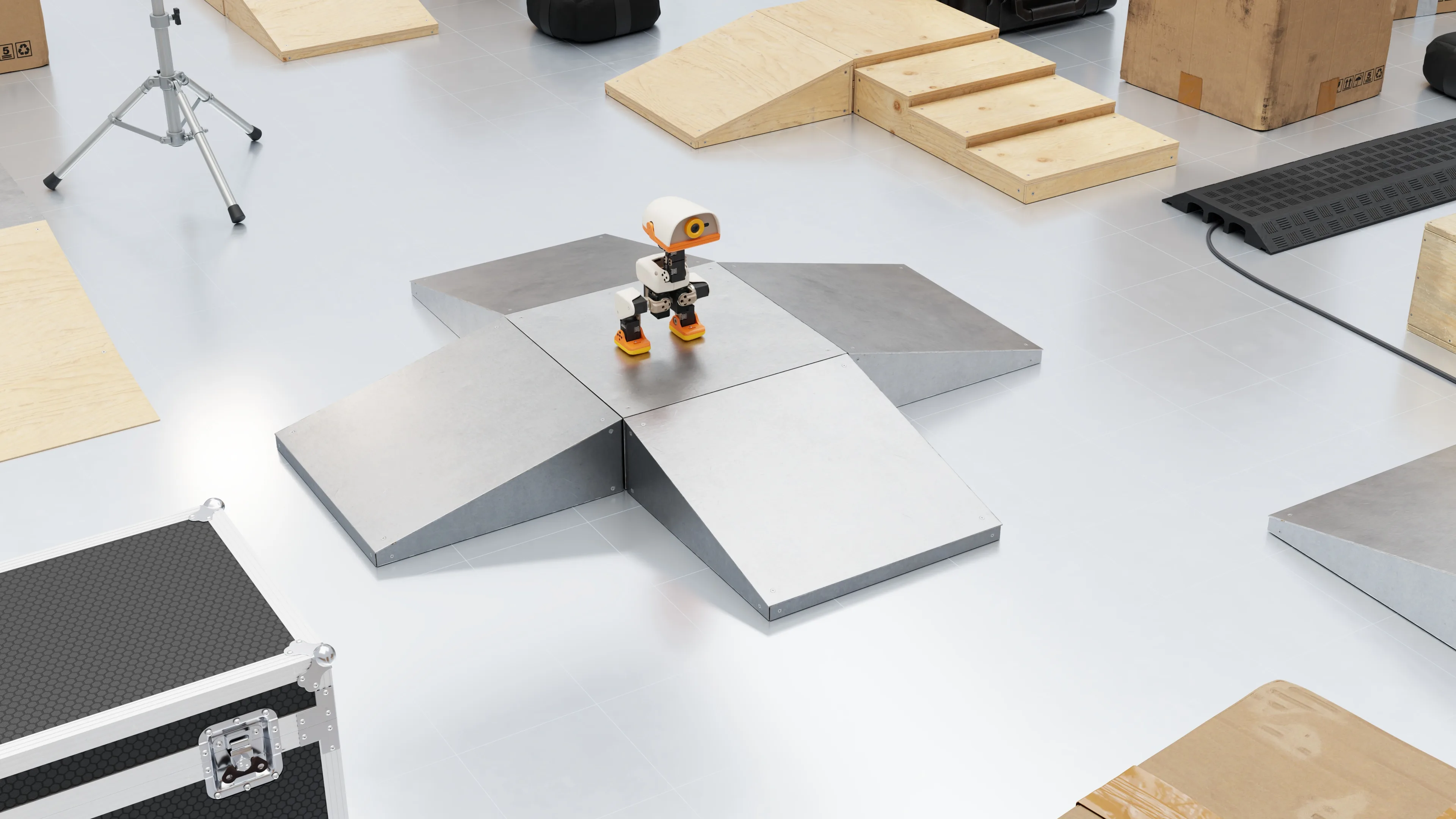
NVIDIA presents a workflow for teaching a simulated Microduck robot to navigate an obstacle course. Agents assist with planning and asset preparation; Isaac Sim supports the environment and local evaluation, while Isaac Lab supports policy training.
The walkthrough links scene construction, physical modeling and visual observations to learning and validation. It explicitly treats the result as a foundation for physical deployment, where differences between simulation and real-world behavior require further work.
Our reading: separate the quality of the generated scene from the quality of the robot policy. A convincing rendering cannot establish balance, perception or safety on hardware. The useful next checkpoint is a reproducible test with stated assumptions and recorded failures, followed by carefully bounded physical evaluation. This is a technical demonstration, not a claim of completed field deployment.
Source: Using AI Agents to Teach Robots Like Microduck to Walk in Simulation · 2026-10-23
Why it matters
Preserve a clear test boundary between simulated course completion and physical robot performance.