

Analysis
MIT News reports on X-Hinges, software from researchers at MIT CSAIL and Tianjin University for designing 3D-printed objects with embedded motion sensing. It places distinct conductive materials in sensing elements and connecting traces to reduce signal interference.
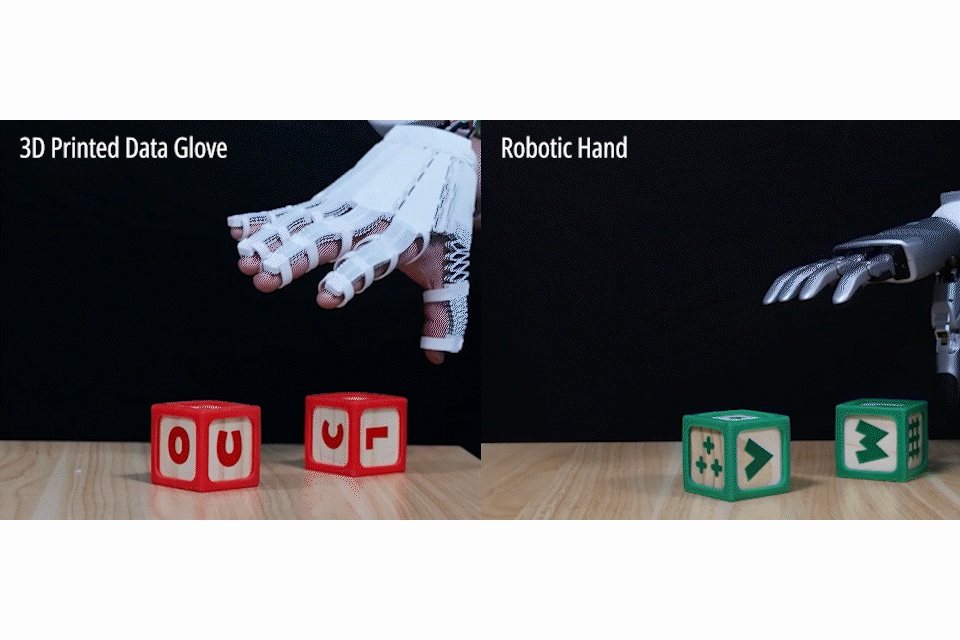
Users connect shapes and specify motion; the software embeds sensors at bending regions. Demonstrations include a glove that records finger movement and relays it to a robotic hand. The work concerns measurable mechanical motion and responsive devices. The headline's description of self-awareness should not be read as a claim of consciousness.
Our reading: combining the mechanical design and sensing path could simplify prototyping. Practical adoption still calls for tests of repeatability, calibration and durability under the intended use. The reported prototypes are evidence of a research approach, not proof that every resulting device is ready for deployment.
Source: This design software reimagines everyday objects as self-aware devices · 2026-10-22
Why it matters
Evaluate sensing quality and mechanical durability together when moving from prototype to application.